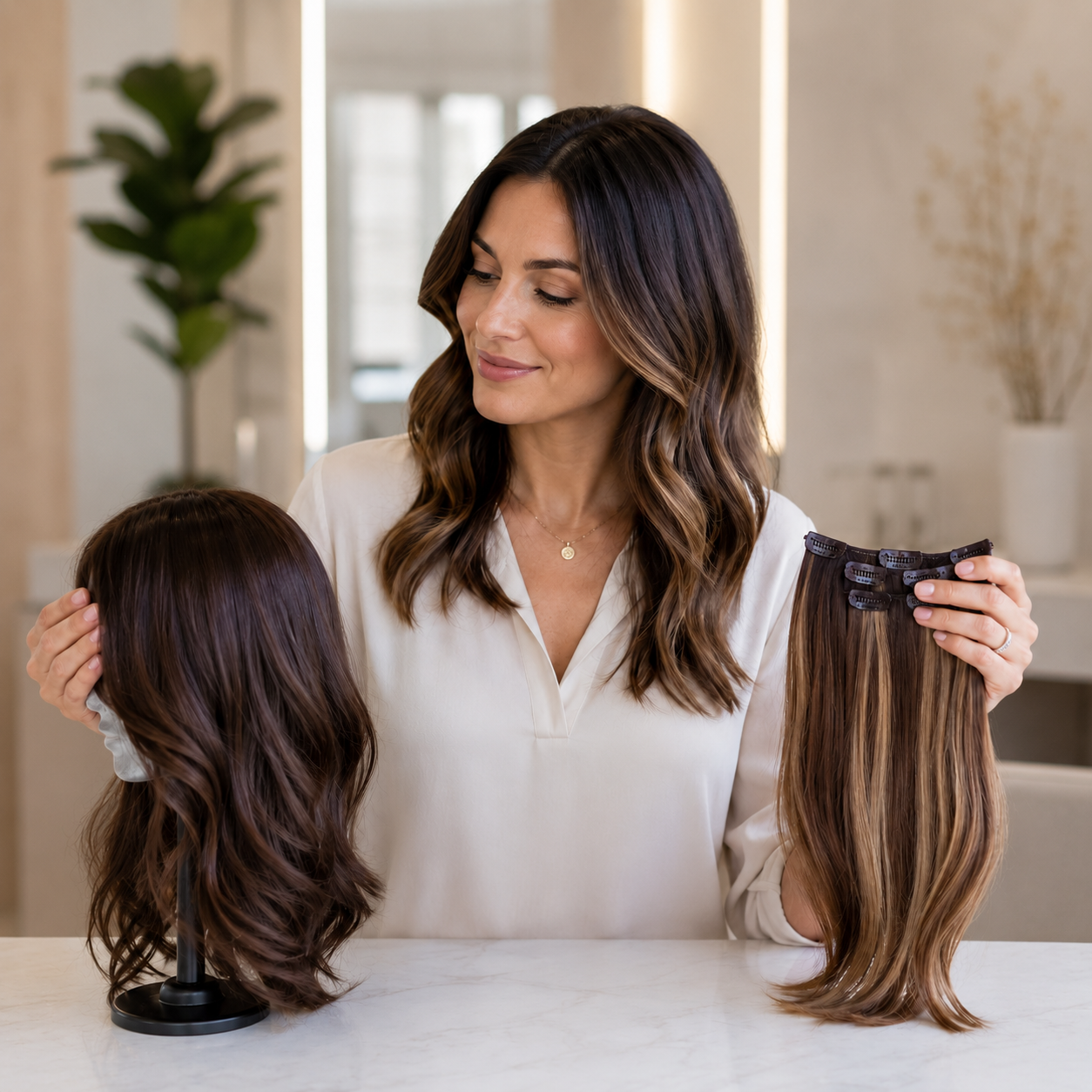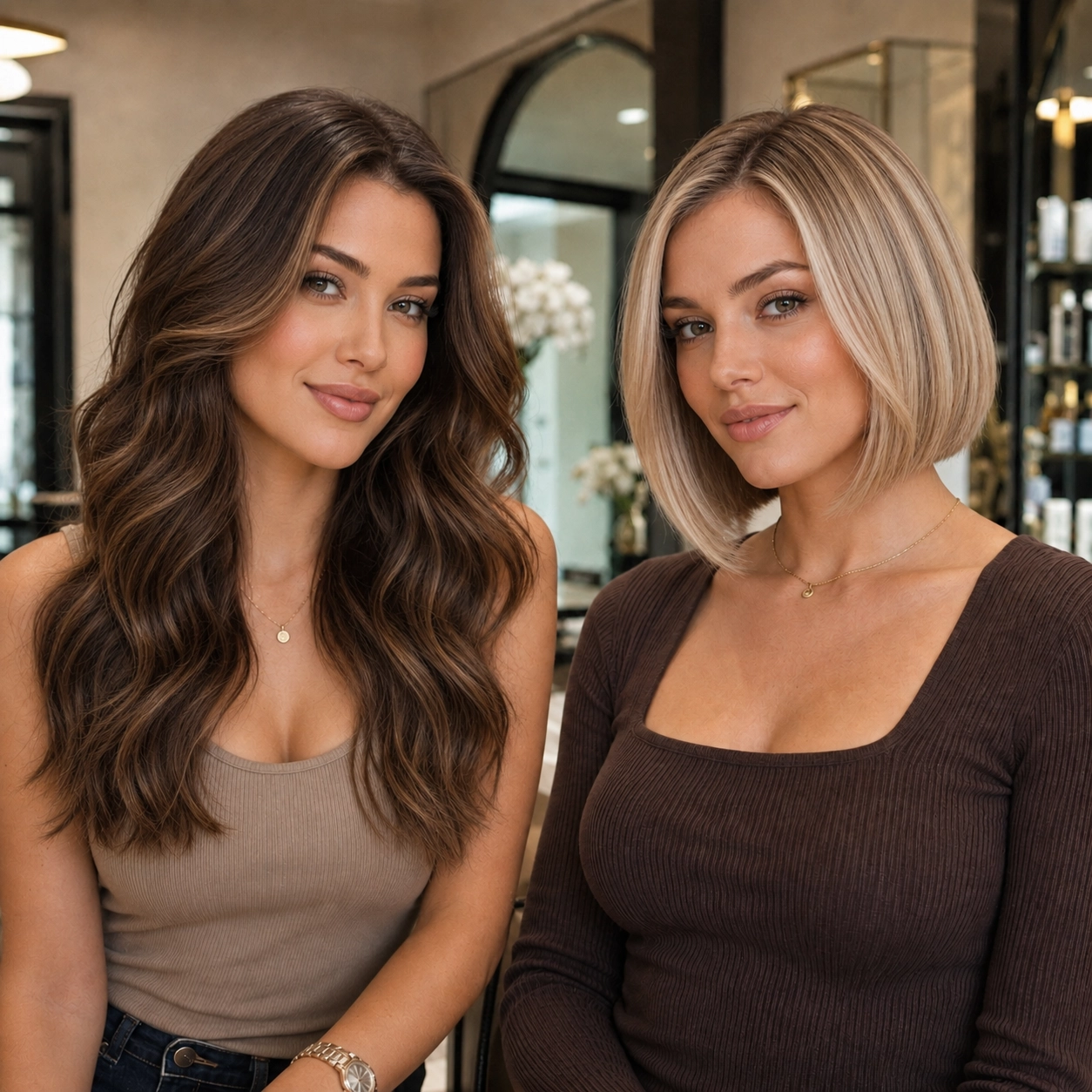

Whether you are looking for your first wig, exploring wigs because of hair loss, or simply want to change your look, understanding the differences between wig types, materials, cap constructions, lengths, densities, and styling options can make the decision much easier.
At Toronto Wig Studio, we help clients explore different wig and hair solutions based on their individual needs, preferences, and lifestyle. This guide explains the most important things to consider before choosing a wig.
Start With Your Reason for Wearing a Wig
Before choosing a wig, think about why you want one and how you plan to wear it.
Someone experiencing significant hair loss may have very different needs from someone who wants a wig occasionally for fashion or convenience.
You might be looking for a wig because of:
- Hair thinning
- Alopecia or other forms of hair loss
- Chemotherapy-related hair loss
- Changes in hair density
- A desire to protect your natural hair
- A new hairstyle without cutting or colouring your own hair
- Everyday wear
- Special occasions
- Fashion or personal expression
Your reason for wearing a wig can influence the ideal cap construction, coverage, attachment method, material, density, and styling options.
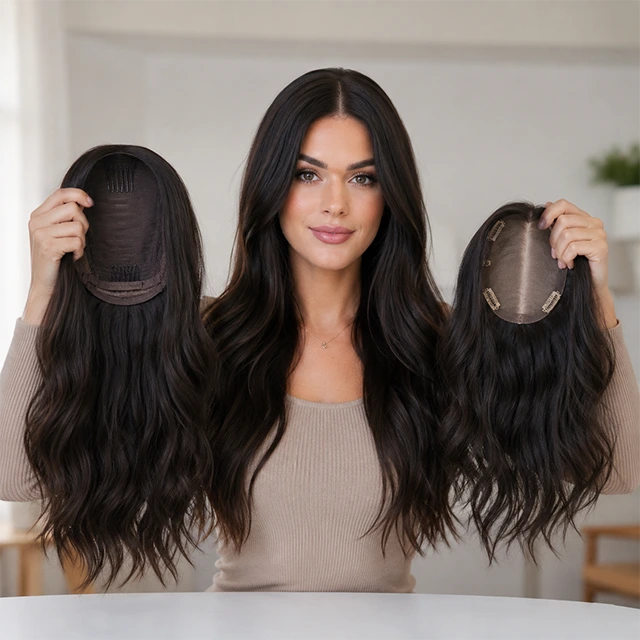
For example, someone looking for complete coverage may benefit from a full wig, while someone experiencing thinning primarily around the crown or part may find that a hair topper provides sufficient coverage.
Human Hair vs. Synthetic Wigs
One of the first major decisions is choosing between human hair and synthetic hair.
Human Hair Wigs
Human hair wigs are made from real human hair and generally offer the greatest flexibility when it comes to styling and customization.
Depending on the construction and quality of the wig, human hair can be:
- Cut and customized
- Blow-dried
- Curled
- Straightened
- Coloured by a professional
- Styled to complement your face and lifestyle
A high-quality human hair wig can provide an exceptionally natural appearance because the hair moves and behaves much like natural hair.
Human hair is often a good choice for someone who wants maximum styling flexibility or plans to wear their wig regularly.
Synthetic Wigs
Synthetic wigs are made from specially manufactured fibres designed to resemble human hair.
Modern synthetic wigs can look remarkably natural and offer several advantages. Many are designed to maintain their original style with minimal daily styling.
Synthetic wigs can be particularly convenient for people who want:
- Easy everyday maintenance
- A consistent hairstyle
- A lighter-care option
- A more accessible price point
- A wig that requires less styling
The right choice depends on your priorities, budget, lifestyle, and desired level of customization.
There isn’t one material that is universally “better.” The best option is the one that works best for you.
Consider the Wig Cap Construction
The cap is the foundation of a wig. Different cap constructions affect comfort, appearance, styling flexibility, and how naturally the hair appears to grow from the scalp.
Lace Front
A lace-front wig features a fine lace section along the front hairline.
The purpose is to create a more natural-looking transition between the wig and your forehead. This can allow the hairline to appear less obvious, particularly when the wig is styled away from the face.
Monofilament
A monofilament top uses a fine material designed to create the appearance of individual hairs emerging from the scalp.
One of the advantages is styling flexibility. Hair can often be positioned in different directions, helping create a natural-looking part.
Monofilament construction can also be an excellent option for people who want a realistic scalp appearance.
Hand-Tied
In a hand-tied wig, individual hairs are carefully attached to the cap by hand.
This can create natural movement and provide a soft, flexible feel. Hand-tied construction is often associated with premium wig designs.
Basic or Traditional Caps
Traditional wig caps can be durable, practical, and relatively easy to maintain. They can also provide good volume and structure.
A basic cap may be perfectly suitable for someone who wants a simple everyday style, particularly when maximum scalp realism is not the primary concern.
Think About Comfort and Fit
A beautiful wig isn’t the right choice if it doesn’t feel comfortable.
Wigs can come in different sizes and may have adjustable features to help achieve a secure and comfortable fit.
When trying on a wig, pay attention to:
- Pressure around the temples
- Fit around the ears
- Security at the back
- Movement when you turn your head
- Comfort along the hairline
- How the cap feels against your scalp
The wig should feel secure without creating uncomfortable pressure.
If you are experiencing hair loss or have a sensitive scalp, comfort may be particularly important. A professional consultation can help you compare different constructions and materials before making a decision.
Choose the Right Wig Density
Density refers to how much hair is used in a wig.
It can range from very light and natural-looking to fuller and more voluminous.
A common mistake is choosing a wig that is significantly denser than the hair you normally wear simply because you like the volume.
A wig that complements your natural proportions can often look more believable.
Your desired density may depend on:
- Your existing hairstyle
- Your age and personal style
- Your face shape
- Your lifestyle
- Whether you want volume or a subtle appearance
- How much hair you are accustomed to wearing
A professional stylist can customize or thin certain wigs when appropriate to create a more personalized result.
Select a Length That Fits Your Lifestyle
Wig length is another important consideration.
Short wigs can be easy to manage and are often practical for active lifestyles. Medium-length styles can provide versatility, while longer wigs can offer dramatic styling possibilities.
Ask yourself how much time you realistically want to spend styling and maintaining your wig.
For everyday wear, consider whether the length will work with:
- Your work routine
- Exercise
- Travel
- Weather
- Your preferred styling routine
- Your clothing and personal style
The best wig is one you will actually enjoy wearing.
Choose a Colour That Looks Natural
Wig colour is about more than matching your previous hair colour.
The right colour should complement your skin tone, eyes, eyebrows, and overall appearance.
Some people prefer to reproduce their natural hair colour as closely as possible. Others use a wig as an opportunity to explore a different shade.
When choosing a colour, consider:
- Your natural or previous hair colour
- Skin undertones
- Eye colour
- Root colour
- Highlights and lowlights
- Your preferred level of contrast
If you want a particularly natural appearance, subtle variations in colour can often look more realistic than a completely uniform shade.
A professional wig stylist can help you compare colours in person and determine which shades best complement your features.
Think About Your Face Shape
Your face shape can help guide your choice of wig length, volume, layers, and overall silhouette.
Common face shapes include:
- Oval
- Round
- Square
- Heart
- Long
- Diamond
This doesn’t mean you have to follow rigid hairstyle rules. Personal preference should always come first.
However, understanding proportions can help when deciding where you want volume and where you want the hair to fall around your face.
A skilled stylist can customize a wig through cutting and styling to create a shape that feels right for you.
Consider Your Daily Lifestyle
The ideal wig for someone who works in an office may not be the same as the ideal wig for someone who travels frequently, exercises regularly, or wants a low-maintenance hairstyle.
Think about your typical day.
Do you:
- Exercise frequently?
- Travel often?
- Spend time outdoors?
- Prefer low-maintenance hair?
- Like changing your hairstyle?
- Need a wig for everyday wear?
- Want something primarily for special occasions?
Your lifestyle should influence your decision.
For example, someone who wants to spend very little time styling their hair may prefer a low-maintenance synthetic style, while someone who enjoys changing their hairstyle may prefer the flexibility of human hair.
Think About How You Want Your Hairline to Look
For many first-time wig wearers, the hairline is one of the biggest concerns.
A natural-looking hairline can make a significant difference in how confident you feel wearing a wig.
Lace-front construction can help create a natural transition at the forehead, while other construction techniques can provide different benefits.
Styling also matters.
The right cut, colour, density, and placement can make a wig look significantly more natural than simply choosing an expensive wig and wearing it straight out of the box.
Professional customization can include trimming, shaping, layering, colour adjustments where appropriate, and styling.
Don’t Ignore Maintenance
Before buying a wig, understand what will be required to keep it looking its best.
Human hair wigs generally require styling and care similar to natural hair. They may need professional maintenance, washing, conditioning, and restyling.
Synthetic wigs often require less daily styling, but they still need appropriate cleaning and care to preserve the fibres and shape.
Ask about:
- How often the wig should be washed
- Which products are appropriate
- How it should be stored
- Whether it can be heat-styled
- How often it should be professionally maintained
- How long you can reasonably expect it to last
Proper maintenance can significantly affect the appearance and lifespan of a wig.
Consider Your Budget
Wigs are available across a wide range of prices.
The cost can depend on factors such as:
- Human hair or synthetic fibre
- Hair quality
- Hair length
- Density
- Cap construction
- Hand-tied workmanship
- Customization
- Brand
- Colour and processing
Instead of focusing exclusively on the lowest price, consider the overall value.
If you plan to wear a wig frequently, comfort, durability, styling flexibility, and customization may be more important than the initial purchase price.
A professional consultation can help you understand which features are worth prioritizing for your particular needs.
Try Before You Decide
Photos online can be helpful, but they cannot tell you everything about how a wig will actually look and feel on you.
Whenever possible, try different styles in person.
Pay attention to:
- How the cap feels
- How the hairline looks
- Whether the density feels natural
- How the colour works with your complexion
- Whether the style suits your face
- How easily the wig moves
- How confident you feel wearing it
Sometimes the wig you initially think you want isn’t the one that ultimately looks or feels best.
Trying several different constructions and styles can make the decision much easier.
Consider Professional Customization
One of the biggest differences between simply purchasing a wig and getting a professional wig service is customization.
Even a beautiful wig may not look its best until it has been adjusted and styled specifically for you.
Customization can involve:
- Cutting
- Layering
- Shaping
- Colour refinement
- Density adjustment
- Bangs
- Face-framing
- Styling
- Fit adjustments
The goal is to make the wig look like your hair, rather than something you are simply wearing.
What Is the Best Wig for You?
There is no single “best wig” for everyone.
The best wig depends on your hair goals, amount of coverage needed, lifestyle, comfort preferences, budget, styling habits, and desired appearance.
For example:
For maximum styling flexibility: A high-quality human hair wig may be ideal.
For easy everyday maintenance: A quality synthetic wig may be a better fit.
For thinning around the crown or part: A hair topper may provide the coverage you need without a full wig.
For a realistic-looking hairline: A lace-front construction may be worth considering.
For a natural-looking scalp and flexible part: A monofilament construction can be an excellent option.
For someone experiencing significant hair loss: A professional consultation can help determine the most appropriate wig construction, coverage, and fit.
Finding Your Right Wig
Choosing a wig doesn’t have to be overwhelming. The right starting point is understanding what you need and then comparing the options based on comfort, appearance, coverage, lifestyle, and maintenance.
At Toronto Wig Studio, we specialize in helping clients find wigs and hair toppers that suit their individual needs. Our selection includes human hair and synthetic options, along with professional styling and customization to help create a natural, personalized result.
Whether you’re searching for your first wig, exploring options for hair loss, looking for a hair topper, or simply want a new style, a private consultation can help you make an informed decision.
The right wig isn’t simply the one that looks beautiful on the shelf. It’s the one that feels comfortable, looks natural, fits your lifestyle, and makes you feel like yourself.